When a Taiwan Supplier Fails to Deliver: Can Foreign Buyers Recover More Than a Refund?

Specialized in cross-border investments, fund structuring, and cryptocurrency regulatory matters, with many years of experience in cross-border transactions and corporate legal advisory work.
When a Taiwan Supplier Fails to Deliver: Can Foreign Buyers Recover More Than a Refund?
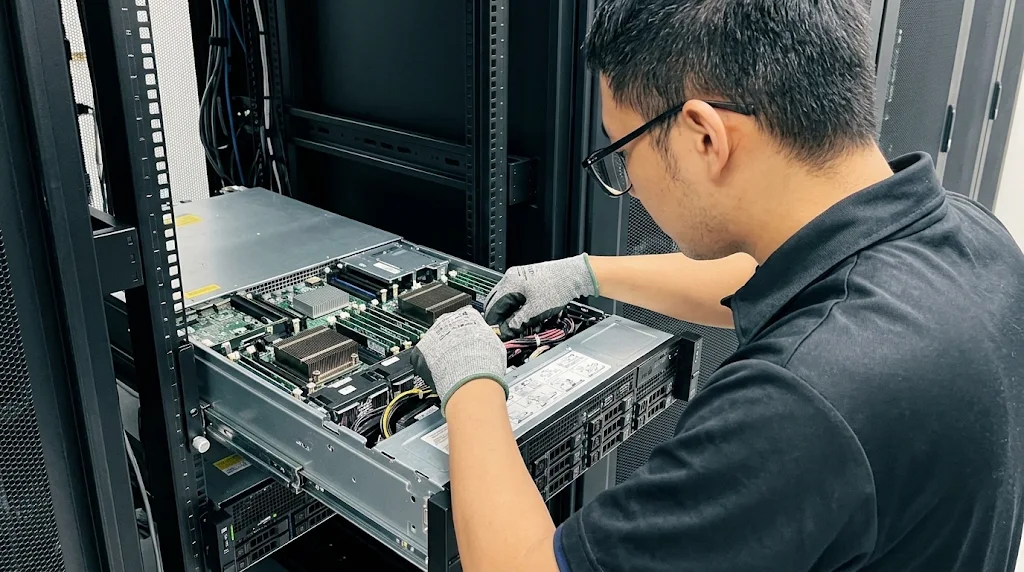
With the rapid advancement of Artificial Intelligence (AI), global enterprises continue to invest heavily in data centers, AI servers, and other digital infrastructure. As a crucial hub in the global supply chain for semiconductors, servers, and electronic equipment, Taiwan has naturally become a primary market for foreign companies procuring critical technological assets.
However, cross-border procurement of tech equipment is rarely an isolated transaction. For developers of large-scale data centers or other tech infrastructure, equipment delivery is intricately tied to site preparation, power supply, cooling systems, financing, and overall operational schedules.
According to the 2026 Global Data Center Outlook published by JLL, 57% of global data center projects in 2025 experienced construction delays of at least three months, with average equipment lead times reaching 33 weeks—an increase of approximately 50% compared to pre-2020 levels. These statistics reflect the severe scheduling and supply chain pressures facing data center construction. For developers, on-time equipment delivery has become a decisive factor impacting the entire investment plan.
Imagine a scenario: A foreign enterprise orders critical server equipment from a Taiwan supplier and completes the construction of server rooms, power, and cooling systems based on the scheduled delivery date. Ultimately, the supplier cancels the order due to upstream supply issues and offers a full refund. For the supplier, a refund might signify the end of the transaction; but for the buyer, a refund only returns the initial payment—it cannot revert the project to its pre-investment state.
This is not merely a legal issue of breach of contract; it involves the cost structure, supply chain management, and commercial risk allocation of large-scale technology projects.
Why Does a Single Failed Delivery Impact the Entire Project?
High Interdependence in Large-Scale Tech Projects
Taking an AI data center as an example, its construction involves multiple highly integrated systems: computing equipment (GPU servers), power facilities, cooling systems, network infrastructure, and site engineering. Developers often manage multiple procurement, engineering, and technical service contracts simultaneously. When the delivery of critical computing equipment—which lies on the project's Critical Path—fails, the impact extends beyond a single installation; it disrupts the testing, commissioning, and operational timeline of the entire project. Replacing a supplier requires re-evaluating equipment dimensions, power usage, thermal configurations, and system compatibility, causing a ripple effect throughout the project execution plan.
Time as a Tangible Cost for Developers
Large-scale tech infrastructure requires substantial Capital Expenditure (CapEx) upfront. Before operations commence, companies have already committed funds to site leasing, electromechanical engineering, and financing. If a data center's launch is delayed by six months due to undelivered equipment, the developer must continue bearing fixed costs even if the supplier refunds the purchase price. More importantly, the assets expected to generate revenue sit idle. Therefore, when evaluating procurement risks, enterprises must account for the Cost of Delay rather than just the purchase price.
From Purchase Price to Total Project Cost: What Did the Enterprise Actually Lose?
Sunk Costs of Irreusable Investments
Certain preliminary engineering works are designed for specific equipment specifications. If the original equipment cannot be procured and the alternative requires a completely different setup, existing construction may need to be redone or abandoned. Legally, the crucial analysis involves distinguishing which expenditures lost their utility due to the breach, which retain residual economic value, and which could be mitigated through alternative procurement.
Additional Expenses Incurred Due to Project Delays
This category includes costs that would not have occurred but for the supply failure, such as extending service periods for engineering contractors, paying extra facility rent and financing costs, redesigning layouts, or emergency procurement of alternative equipment at higher prices. While these costs are easier to prove via invoices and contracts, establishing a direct causal link to the breach is essential.
Lost Commercial Opportunities and Delayed Operations
Failing to commence operations on time impacts future cash flows. Under Article 216 of the Taiwan Civil Code, compensation for damages includes lost profits, provided they were objectively anticipated. If a developer has already signed long-term client service contracts, there is a firmer foundation for claiming lost profits. Assessing commercial losses requires a comprehensive evaluation of provable operational benefits, alternative solutions, and costs saved.
Risk Asymmetry in the Supply Chain
Why Do Suppliers Favor Limitation of Liability?
From a supplier's perspective, if the sales value of a batch of equipment is only a fraction of the total data center investment, assuming liability for the buyer's entire project delay and business losses creates a disproportionate risk. Therefore, international equipment suppliers frequently incorporate Limitation of Liability clauses or exclude consequential damages and lost profits as a primary commercial risk control mechanism.
Why Buyers Cannot Accept a Mere Refund as the Sole Remedy
If the equipment determines the viability of the entire project, allowing the supplier to simply issue a refund shifts almost all delivery risks onto the buyer. Particularly for highly customized equipment with long lead times, finding an immediate alternative is exceptionally difficult. Thus, negotiations must extend beyond price to include supply guarantees and viable fallback solutions for breaches.
Who Bears the Risk of Upstream Supply Failures?
When an upstream manufacturer fails to deliver, the Taiwan supplier might be unable to fulfill its contract. However, upstream failure is not automatically an excusable event. Under Taiwan law, determining liability depends on whether the contract promised a firm delivery date or explicitly conditioned delivery on the original manufacturer's allocation confirmation. Such nuances dictate the allocation of risk.
Does a Full Refund Terminate the Supplier's Liability?
Under Article 260 of the Taiwan Civil Code, the rescission of a contract does not prejudice the right to claim damages. Thus, even if a buyer receives a refund, they do not necessarily forfeit other claims. However, practical analysis requires careful attention to the following:
Did the Supplier Limit Liability Through the Contract?
Large procurement contracts often contain Exclusion of Consequential Damages and Exclusive Remedy clauses. Nevertheless, under Article 222 of the Taiwan Civil Code, liability for intentional acts or gross negligence cannot be released in advance. Article 247-1 also places restrictions on pre-formulated standard contract terms that are manifestly unfair.
Does the Refund Constitute a Full and Final Settlement?
If the parties sign an order cancellation document explicitly stating that the refund serves as a "Full and Final Settlement," it creates a different legal outcome. Buyers must be vigilant when accepting refunds to ensure they are not inadvertently waiving their right to further claims.
Commercial Decisions Following a Supply Failure
In large tech projects, the most pressing issue is often strategic, not merely legal. Under Article 217 of the Taiwan Civil Code, if the injured party is negligent in causing or exacerbating the injury, the court may reduce or absolve the compensation. Therefore, commercial decisions—such as finding alternative suppliers, rolling out the project in phases, or downsizing—directly impact both actual economic losses and the scope of subsequent legal claims. Legal counsel should assist enterprises in evaluating sound commercial solutions while preserving their legal rights.
Mitigating Project Risks During the Procurement Phase
The most effective risk management occurs before signing the contract. Enterprises should consider the following arrangements:
Establish Firm and Binding Delivery Deadlines
Distinguish between firm delivery dates and estimated lead times. Clarify whether the supplier can unilaterally postpone delivery due to upstream issues, and explicitly outline liability for delays.
Assess Actual Supply Capabilities
Verify if the supplier has confirmed allocation from the upstream manufacturer, whether production has been scheduled, and if there are export restrictions. This helps gauge the reliability of delivery commitments.
Incorporate Alternative Supply Mechanisms
Stipulate whether the buyer can cancel pending orders, seek alternative suppliers, or demand the original supplier’s assistance in sourcing replacements if critical equipment is delayed.
Align Limitation of Liability with Overall Project Risk
The scope of liability limitations must align with the equipment's importance. While lower caps might be acceptable for highly substitutable standard equipment, critical assets demand more robust performance guarantees.
How Should Foreign Buyers Assess Legal Remedies for Taiwan Supplier Defaults?
Foreign enterprises should first confirm the complete contractual relationship, which may include Quotations, Proforma Invoices (PI), Purchase Orders (PO), and email correspondence. Additionally, determine the governing law and jurisdiction pursuant to Article 20 of Taiwan's Act on Choice of Law in Civil Matters Involving Foreign Elements. Before initiating claims, it is advisable to follow three steps: First, confirm contractual obligations and reasons for breach by organizing all procurement records. Second, assess actual commercial losses by categorizing irreusable investments, extra expenses, and replacement costs. Third, select a commercially viable dispute resolution method by evaluating the cost-benefit of legal letters, commercial negotiations, or formal litigation/arbitration.
Conclusion: A Refund May Reverse a Purchase, but Time Cannot Be Refunded
A refund may reverse a purchase, but it does not necessarily reverse the commercial consequences of a failed project.
A seemingly straightforward equipment procurement can profoundly impact an entire cross-border investment. A refund might return the purchase price, but it cannot undo the overall commercial impact of a failed transaction. Enterprises must integrate equipment supply guarantees, delivery schedules, and contractual liabilities into their comprehensive investment risk management framework, viewing it through both commercial and legal lenses.
Read More: How Foreign Companies Can Use Taiwan Tax Treaties
Read More: Managing Taiwan Withholding Tax Risk for Foreign Companies
文章位置: 首頁 » 新創與企業法務 » When a Taiwan Supplier Fails to Deliver: Can Foreign Buyers Recover More Than a Refund?